Launch offer — valid today only

📄 Digital book in PDF · read it on your phone or print it

Gelcoat, Cracks and Hull Repair in Drawings Every Step in the Same Order

The hull in cross-section, the tap test, stress cracks vs. crazing, the 12:1 bevel, the grit sequence, small holes in the laminate, fairing and polish, and when to call a pro. Each topic gets its own page: the drawing first, then what you need to remember. 70 illustrated pages.

START FIXING IT THIS WAY

🔒 Secure checkout · PDF by email · 30-day guarantee

Every topic, its own pageEach repair step drawn, with the explanation right beside it
70 illustrated pages10 parts, from the hull in cross-section to the season-start walk-around
Up-to-date sourcesChecked against resin and gelcoat makers' data sheets and OSHA and EPA guidance on resin and dust
PDF by emailFormat

Look Inside the Book

Every page has one big drawing and a box with the numbers and steps you need to know:

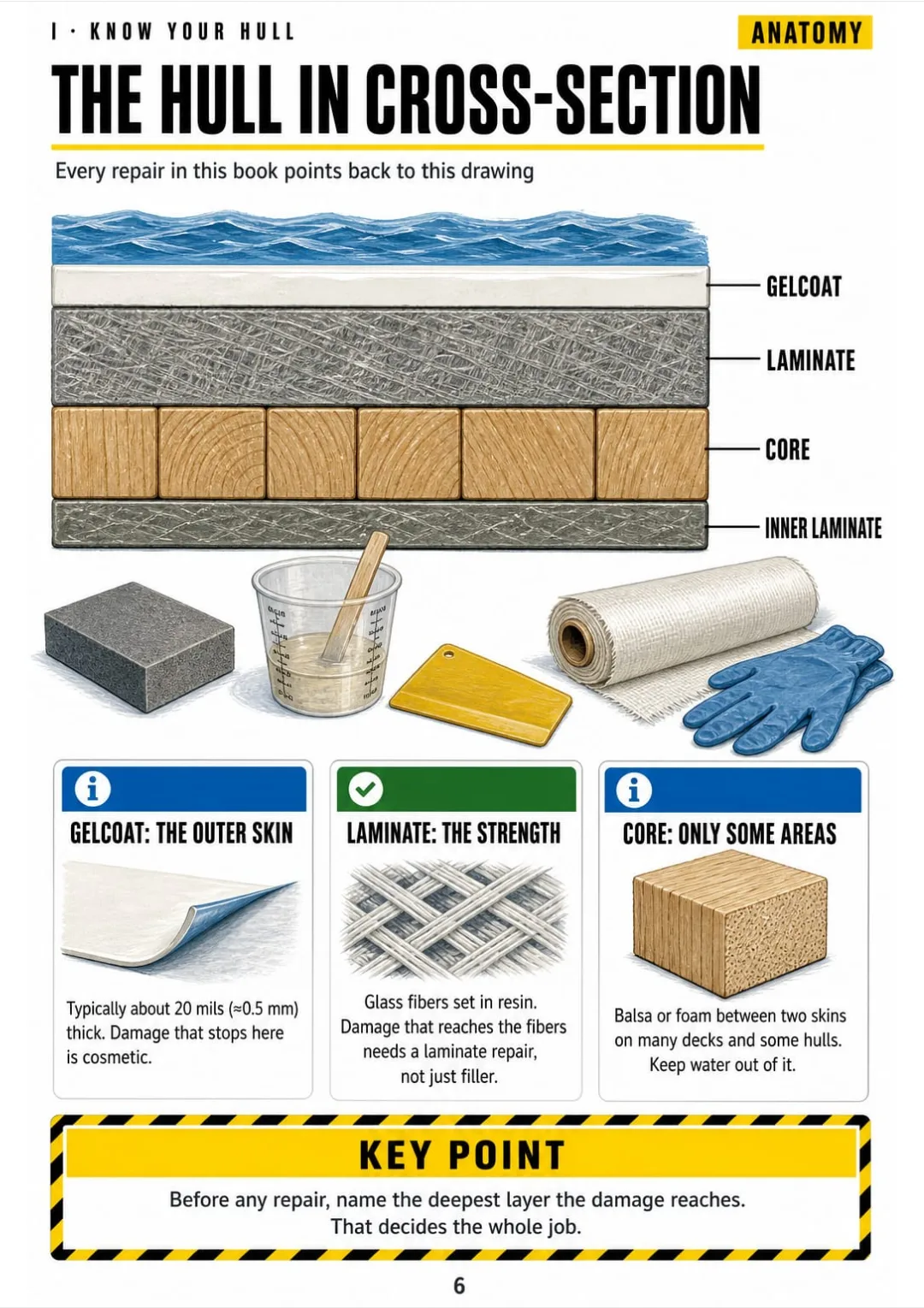
One drawn cut-away: gelcoat, skin coat, laminate, core, inner laminate, stringers and bulkheads.
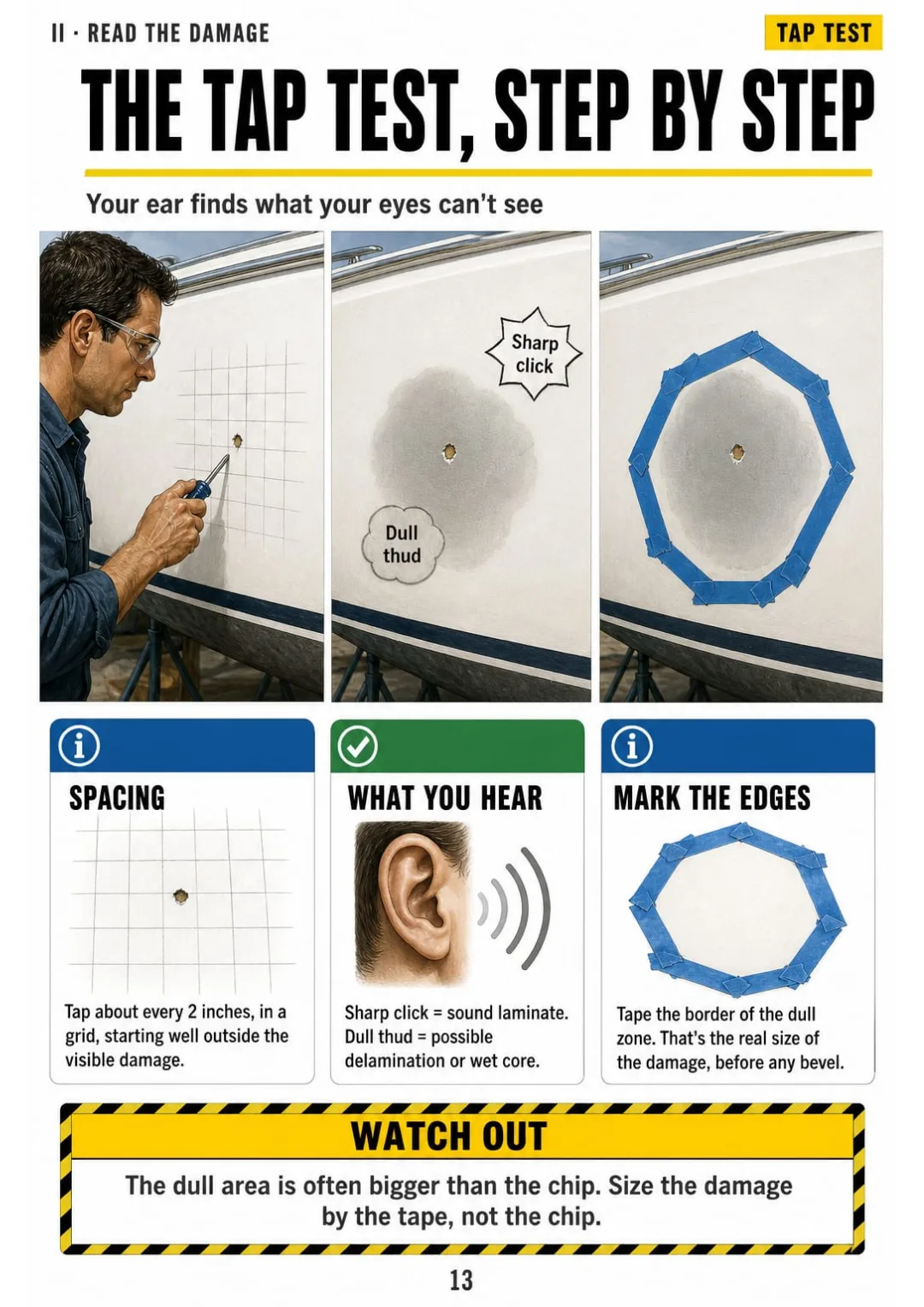
Tap every 2 in in a grid: click = sound, thud = possible delamination or wet core.
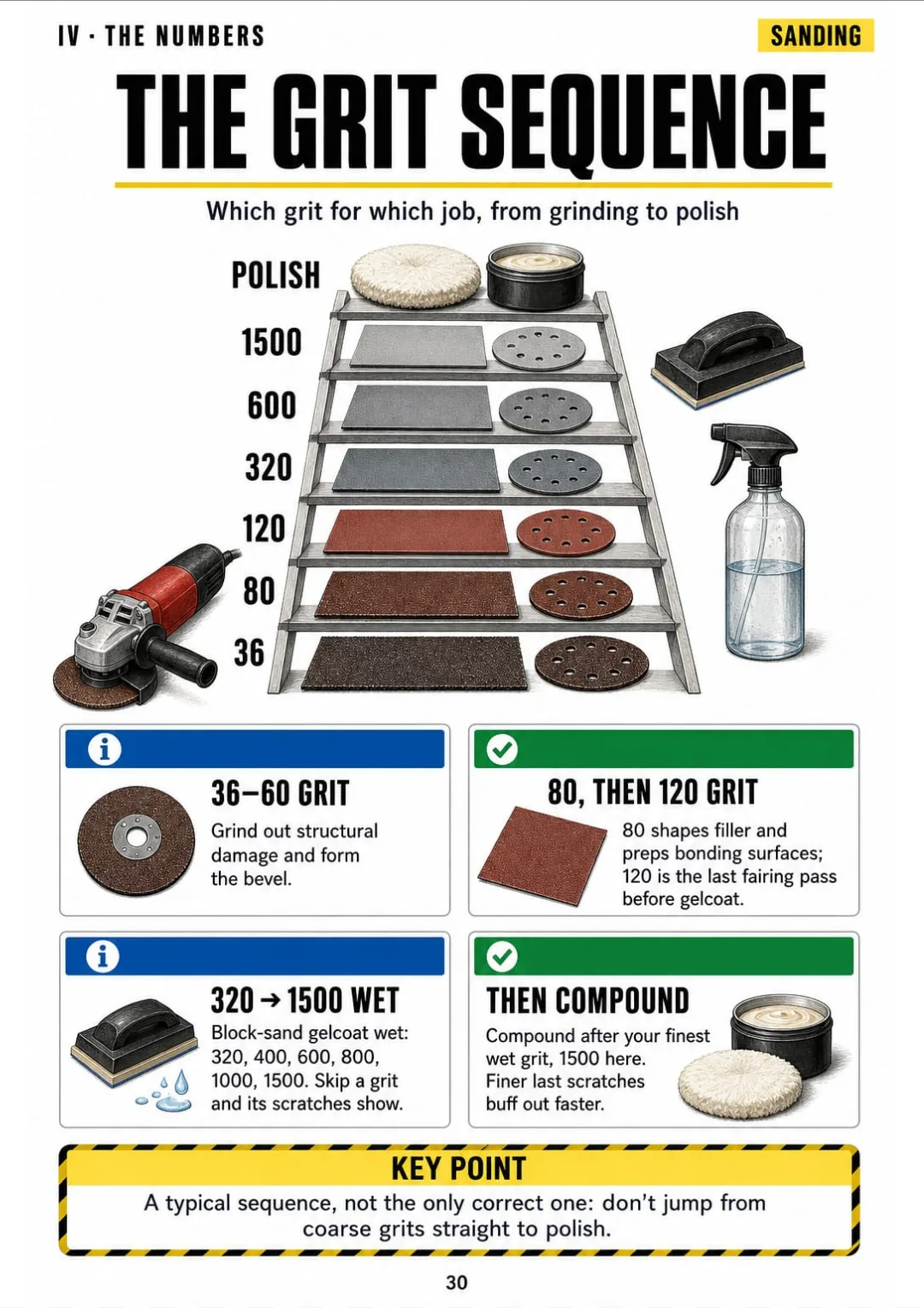
36–60 to grind, 80 to shape, 120 to fair, 320 → 1500 wet on gelcoat, then compound.
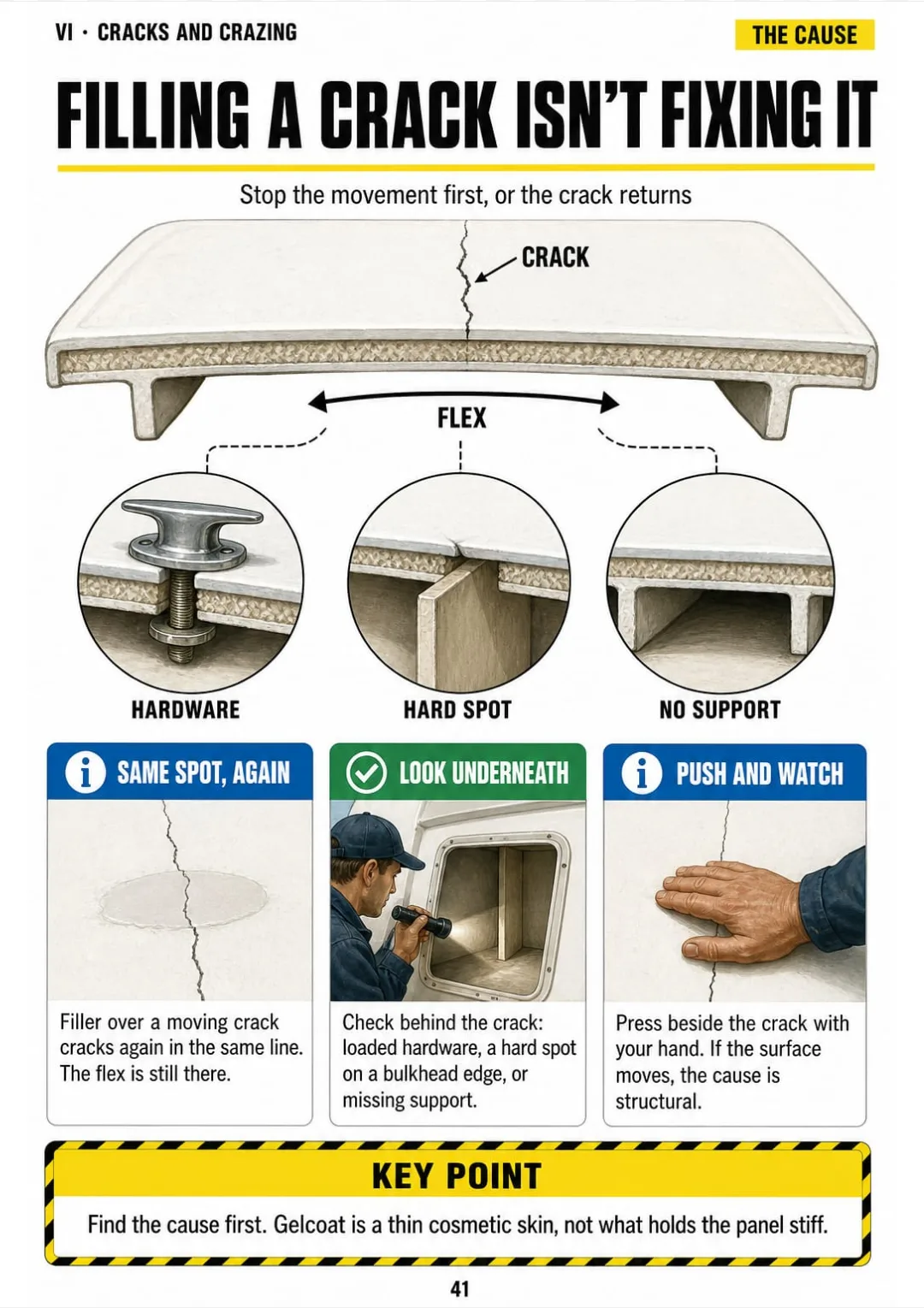
Crack + flex + cause underneath: fix the cause, then the crack.
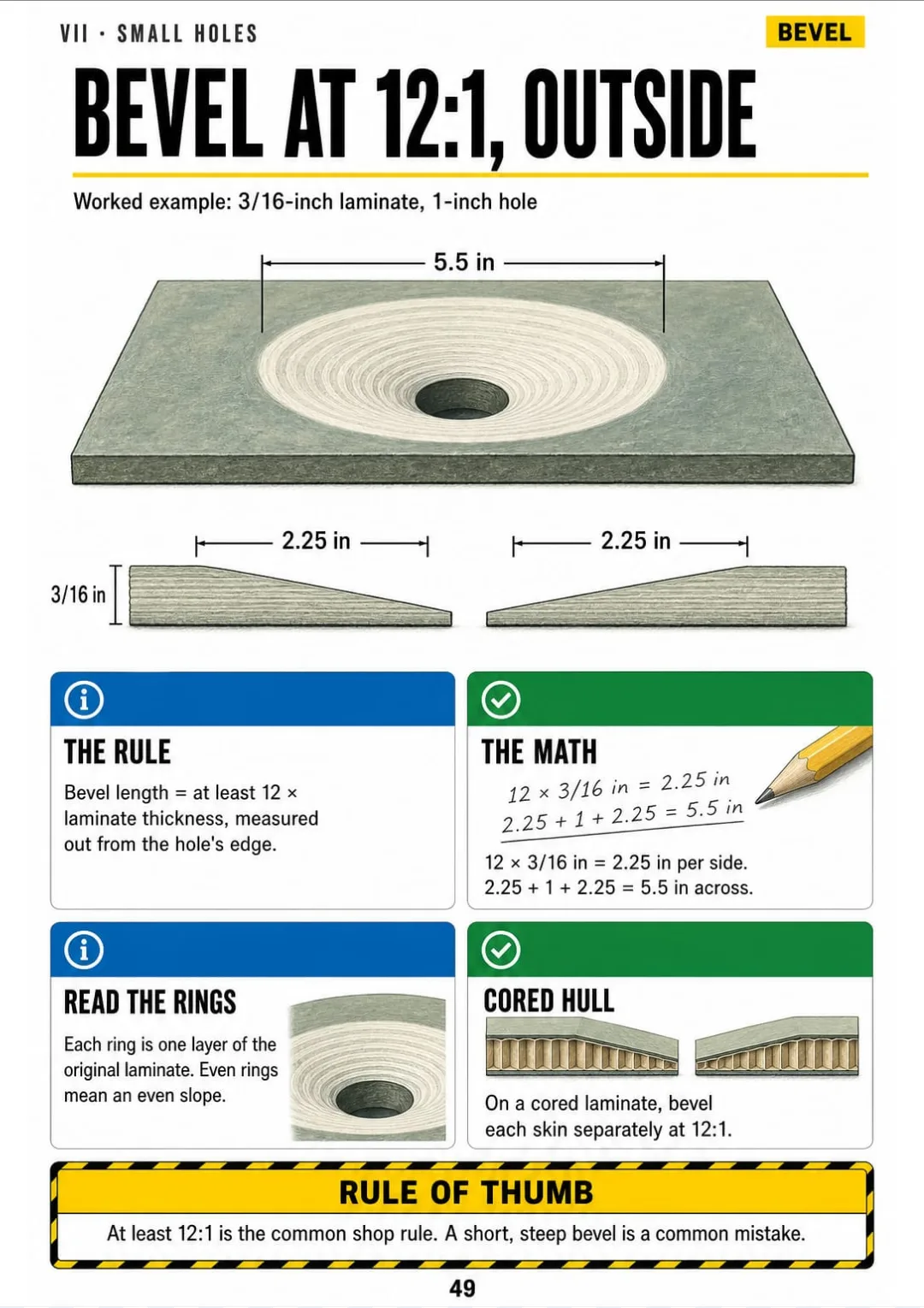
3/16-in skin × 12 = 2.25-in bevel each side, 5.5 in across.
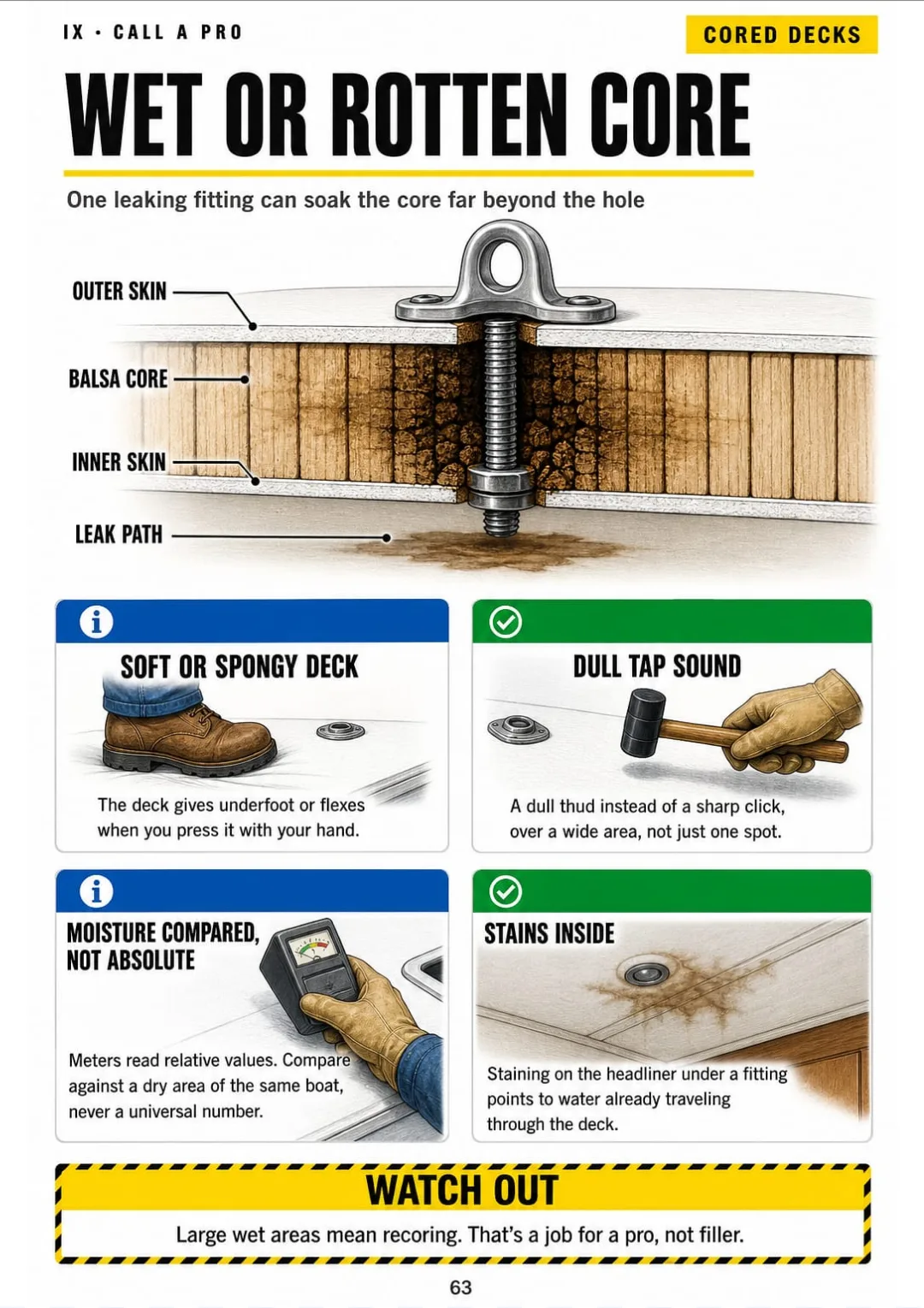
Soft deck, dull tap, high relative readings, headliner stains: check the core.
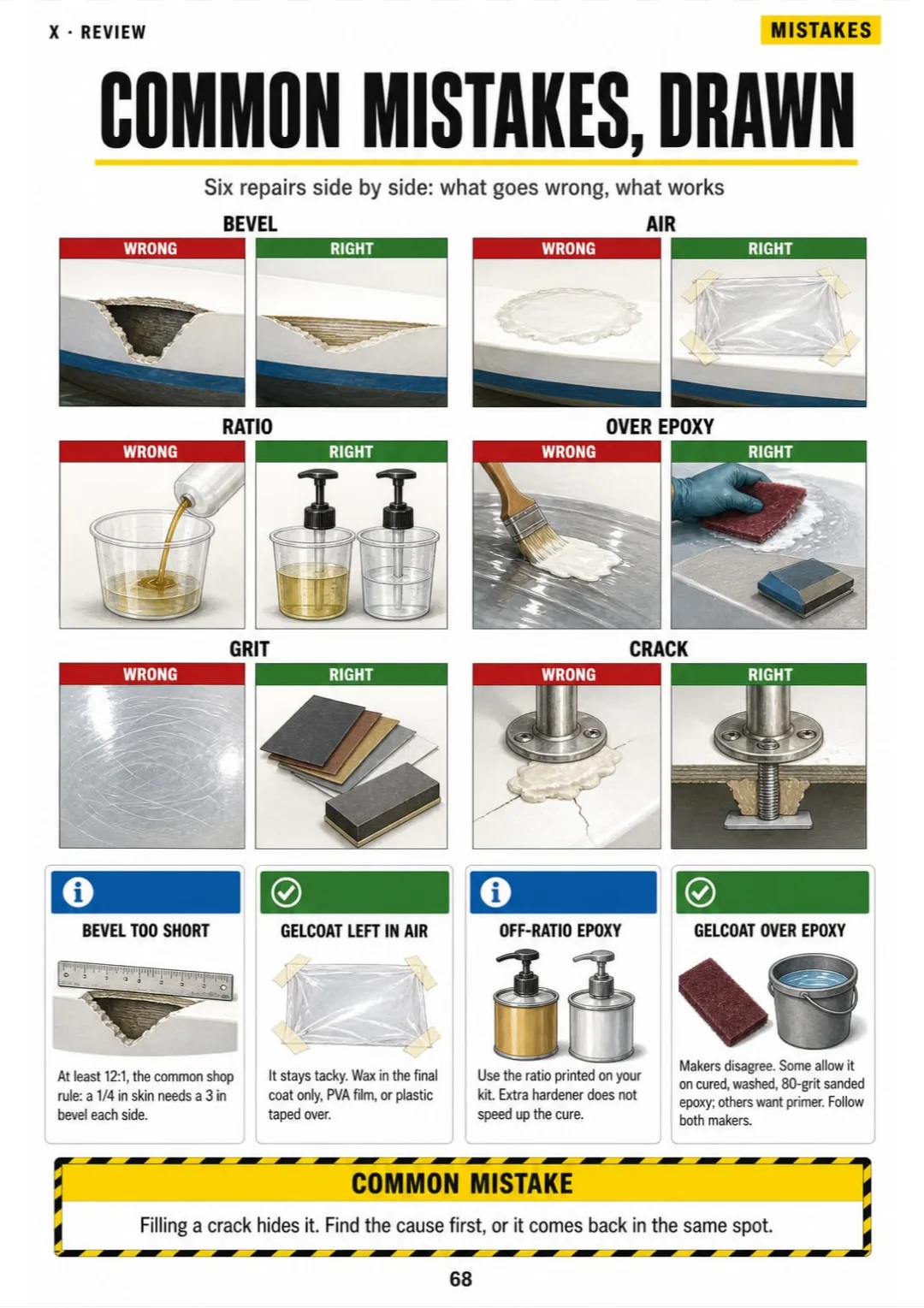
6 wrong/right pairs: 12:1 bevel, air-cured gelcoat, ratio, gelcoat over epoxy, grits, cracks
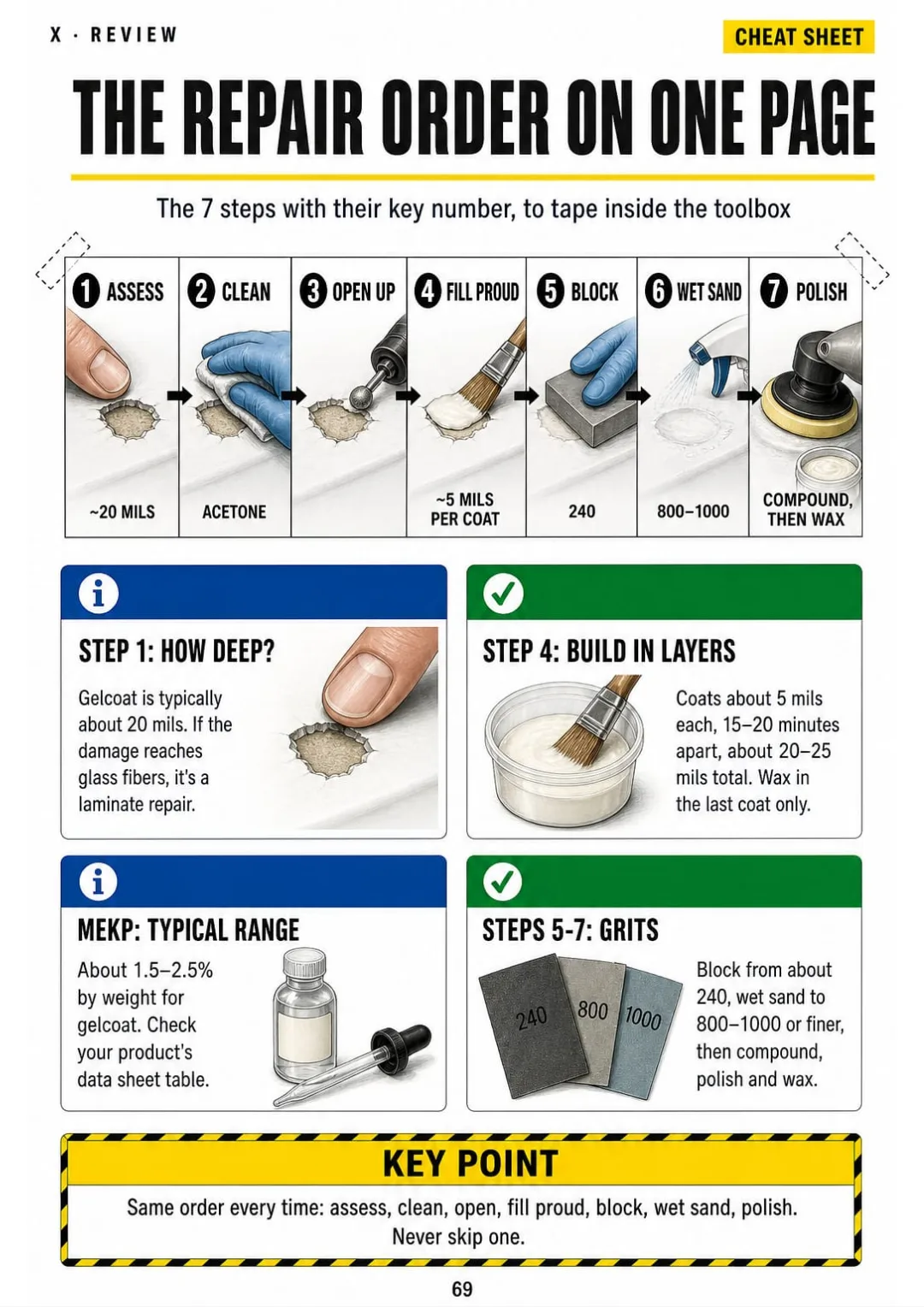
The 7-step strip with its key number: ~20 mils, ~5 mils per coat, 240, 800–1000, compound then wax

Swipe to see more →

These are real pages from the book. The table of contents is the full one: 10 parts and 65 topics.

The Problem Isn't You. It's How It Was Explained.

You're kneeling next to the hull. The filler in that chip has finally cured, you've got sandpaper in your hand, and you can't remember which grit comes next.

The manual covered it, in two paragraphs of grit numbers mixed with exceptions. Ten videos gave you ten different sequences. Nothing put the order in one place you could actually see.

36–60 to grind, 80 to shape, 120 to fair, 320 → 1500 wet on gelcoat, then compound.

In this book, the grit sequence is one page: 36–60 only to grind out damaged laminate, 80 to shape, 120 to fair, then wet from 320 up to 1500 on the gelcoat, one grit at a time, and compound last. Each grit is drawn next to the job it does.

Other topics get the same treatment: the 12:1 taper, mixing ratios, pot life by temperature, stress cracks vs. crazing and the tap test, each on its own page.

So you glance at the page, pick up the right paper and keep sanding. You know what comes next without digging through the manual again.

COMPARE FOR YOURSELF

Same Topic, Two Ways to Learn It

THIS
  • The manual: line after line of text
  • Tap testing explained only in words
  • You go back to the boat still unsure
Percussion sounding is a non-destructive method for the preliminary identification of delamination and core degradation in composite structures. The inspector should strike the laminate surface at regular intervals, typically on the order of two inches, using a light, hard implement such as a small hammer or the handle of a screwdriver, while attending to variations in acoustic response. A sharp, high-pitched report indicates a well-bonded laminate, whereas a dull or muted response may suggest disbonding, voids, or moisture intrusion in the core, which should be confirmed by additional means.
FOR THIS
  • The tap test in one drawing
  • The grid spacing and the sounds in a box
  • You see it and you get it
Tap every 2 in in a grid: click = sound, thud = possible delamination or wet core.
CONTENTS

Take a Look at the 10 Parts and 65 Topics

Know your hull, read the damage, tools and safety, the numbers you forget, gelcoat chips, cracks and crazing, small holes in the laminate, fairing and finish, when to call a pro, and review: 70 pages, all illustrated.

IKnow Your Hull · pp. 6-11
  1. The hull in cross-section
  2. Gelcoat: a paint-like skin, not armor
  3. Solid laminate vs. cored laminate
  4. Polyester, vinylester or epoxy: what your boat is made of
  5. Glass fabrics by weight
  6. Where boats take the stress
IIRead the Damage · pp. 12-18
  1. Cosmetic or structural: the first question
  2. The tap test, step by step
  3. Stress cracks vs. crazing
  4. Cracks around hardware
  5. Impact damage: what's behind the dent
  6. Moisture readings without fooling yourself
  7. The damage checklist
IIITools, Materials and Safety · pp. 19-25
  1. The basic repair kit
  2. Fillers: what goes where
  3. Gelcoat needs air kept out
  4. Protecting your lungs
  5. Skin and eyes: why epoxy allergies happen
  6. Heat, fire and leftover resin
  7. Working around the water
IVThe Numbers You Forget · pp. 26-32
  1. The 12:1 taper
  2. Mixing polyester and MEKP
  3. Mixing epoxy: ratio is not optional
  4. Pot life and temperature
  5. The grit sequence
  6. How many layers of glass
  7. Recoat windows and amine blush
VGelcoat Chips and Gouges · pp. 33-40
  1. The 7-step order
  2. Step 1-2: assess and clean
  3. Step 3: open up the chip
  4. Step 4: fill proud and seal from air
  5. Step 5-6: block it flat
  6. Step 7: compound and polish
  7. Gouges along the rub line
  8. Screw holes you no longer need
VICracks and Crazing · pp. 41-46
  1. Why filling a crack isn't fixing it
  2. Opening a crack correctly
  3. Is the crack into the glass?
  4. Stopping cracks around a stanchion
  5. Crazing over a wide area
  6. Cracks at corners of hatches and windows
VIISmall Holes in the Laminate · pp. 47-55
  1. What counts as a 'small hole'
  2. Cut back to sound laminate
  3. Bevel at 12:1, outside
  4. Backing the hole from inside
  5. Cutting the glass layers
  6. Wetting out and laying up
  7. Peel ply and cure
  8. Rebuilding the inside skin
  9. Gelcoat over a laminate repair
VIIIFairing, Sanding and Finish · pp. 56-61
  1. Fairing: what it is and isn't
  2. Mixing fairing compound
  3. Guide coat: seeing the low spots
  4. Wet sanding without dishing
  5. Matching color on an older hull
  6. Compound, polish, wax
IXWhen to Call a Pro · pp. 62-67
  1. Osmotic blisters
  2. Wet or rotten core
  3. Soft transom
  4. Hull-to-deck joint, keel and stringers
  5. Below-waterline holes and through-hulls
  6. Talking to a surveyor or yard
XReview and Common Mistakes · pp. 68-70
  1. Common mistakes, drawn
  2. The repair order on one page
  3. Season-start inspection walk-around

One Page, One Topic, All Clear

Think of it this way:

It's Saturday at the yard. You've ground out a small hole near the waterline and now you need to bevel the edges, and you're not sure how wide that bevel should be.

You open the page on the 12:1 bevel and see the laminate drawn in section: a 3/16-inch skin times 12 is a 2.25-inch bevel on each side, already worked out for you.

3/16-in skin × 12 = 2.25-in bevel each side, 5.5 in across.

Same with the tap test, stress cracks vs. crazing, mixing epoxy, the grit sequence and wet core: each one on its own page.

Fiberglass Boat Repair Illustrated is 10 parts and 65 topics, all drawn, with common mistakes side by side, the repair order on one page and a season-start walk-around at the end.

What you see drawn, you don't have to memorize.

What's Inside Fiberglass Boat Repair Illustrated:

Ipp. 6-11

Know Your Hull

Know what's under the gelcoat before you sand: the hull in cross-section, gelcoat as a skin, solid vs. cored laminate, polyester, vinylester or epoxy, glass fabrics by weight and where boats take the stress.

IIpp. 12-18

Read the Damage

Tell cosmetic from structural before you buy any resin: the tap test, stress cracks vs. crazing, cracks around hardware, impact damage, moisture readings and the damage checklist.

IIIpp. 19-25

Tools, Materials and Safety

The basic kit, which filler goes where, why gelcoat needs air kept out, your lungs, skin and eyes, heat and leftover resin, and working near the water.

IVpp. 26-32

The Numbers You Forget

The numbers you forget mid-job, each on its own page: the 12:1 taper, mixing polyester and MEKP, epoxy ratios, pot life by temperature, the grit sequence, layers of glass and amine blush.

Vpp. 33-40

Gelcoat Chips and Gouges

The 7-step order for chips: assess, clean, open up, fill proud, block flat, compound and polish, plus rub-line gouges and old screw holes.

VIpp. 41-46

Cracks and Crazing

Why filling isn't fixing, opening a crack, checking if it reaches the glass, cracks at stanchions, wide crazing and hatch corners.

VIIpp. 47-55

Small Holes in the Laminate

What counts as a small hole, cutting back to sound laminate, the 12:1 bevel, backing, cutting and wetting out the glass, peel ply and gelcoat on top.

VIIIpp. 56-61

Fairing, Sanding and Finish

What fairing is and isn't, mixing compound, guide coat for low spots, wet sanding without dishing, color matching on an older hull, and compound, polish, wax.

IXpp. 62-67

When to Call a Pro

Osmotic blisters, wet core, soft transom, hull-to-deck joint, keel and stringers, below-waterline holes, and how to talk to a surveyor or yard.

Xpp. 68-70

Review and Common Mistakes

Common mistakes drawn side by side, the repair order on one page and a season-start walk-around.

At the end of the book: A damage checklist, common mistakes drawn side by side, the repair order on one page and a season-start walk-around.

Plus: 2 Free Books

Repair Practice Workbook: Read the Damage, Pick the Fix

BONUS 1: «Repair Practice Workbook: Read the Damage, Pick the Fix»

Value on its own: US$ 17.90

Look at a drawn damage scenario, decide if it's cosmetic or structural and choose the repair steps, then check your answer before you touch your own boat.

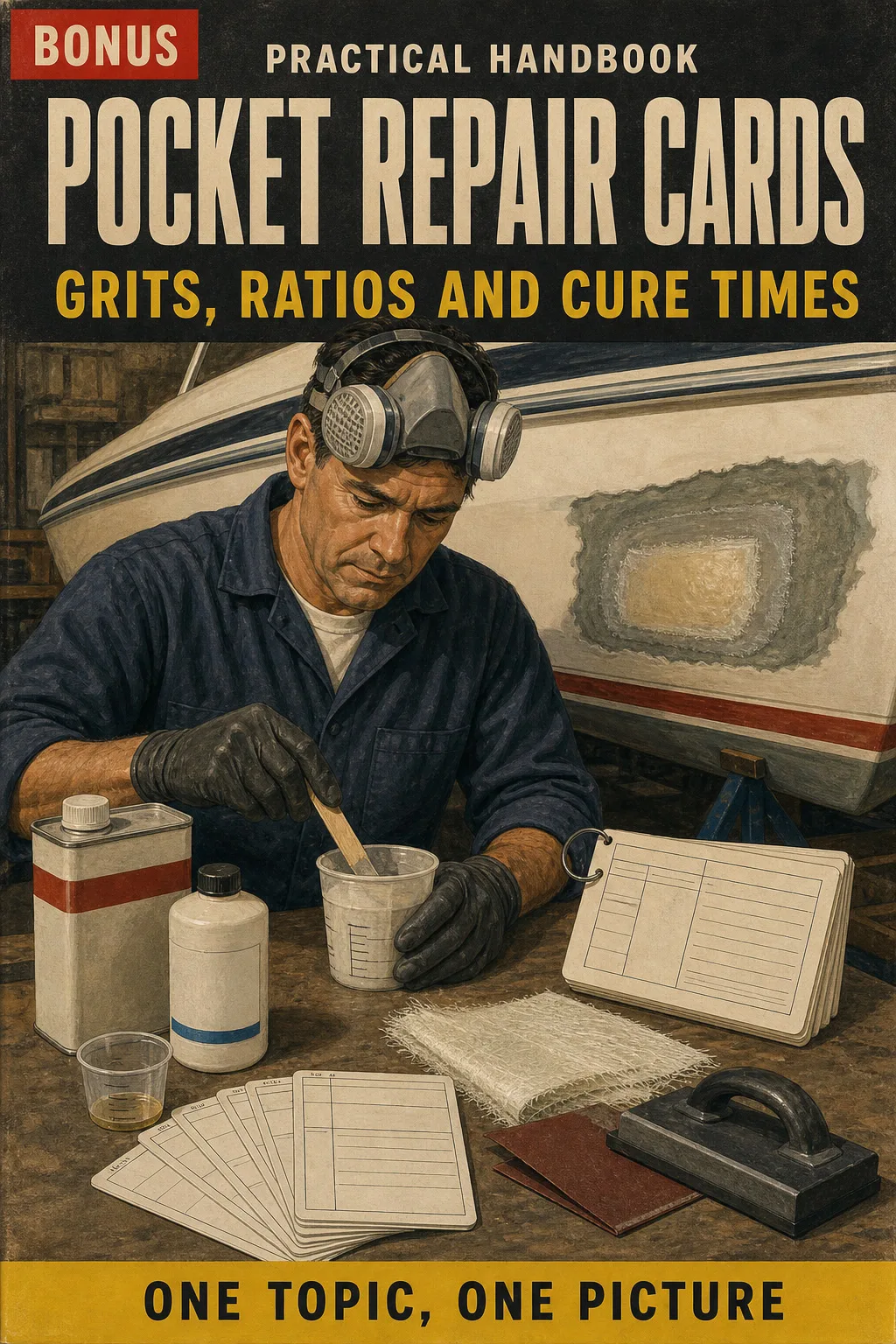
Pocket Repair Cards: Grits, Ratios and Cure Times

BONUS 2: «Pocket Repair Cards: Grits, Ratios and Cure Times»

Value on its own: US$ 14.90

The numbers you forget halfway through a job (taper ratio, grit sequence, mixing ratio and pot life by temperature) on printable cards to keep in your toolbox.

Fiberglass Boat Repair Illustrated with 2 Free Books

  • Fiberglass Boat Repair Illustrated: 70 illustrated pagesUS$ 63
  • BONUS 1: Repair Practice Workbook: Read the Damage, Pick the FixUS$ 17.90
  • BONUS 2: Pocket Repair Cards: Grits, Ratios and Cure TimesUS$ 14.90
  • High-resolution PDF to printIncluded
Total value US$ 95.80
YOUR PRICE:
US$ 27
You save US$ 68.80
YES, I WANT FIBERGLASS BOAT REPAIR ILLUSTRATED FOR US$ 27

📄 This is a digital PDF book sent to your email: nothing is printed or shipped.

Secure purchaseEncrypted payment30-day guarantee

PDF by email: We email you Fiberglass Boat Repair Illustrated as a PDF, together with the two free books. It's a single payment: no installments, no extra charges.

Who This Book Is For

You fix your own boat

You fix your own boat

You see which layer the damage reaches and which repair it needs, one page at a time, before you open a can of resin.

Haul-out or launch is coming

Haul-out or launch is coming

The numbers you need mid-job (taper, grits, mixing ratio, pot life) are on their own pages and on the pocket cards for the toolbox.

You've patched it before

You've patched it before

You find the step you skipped, see why the last patch showed, and know exactly where the DIY line ends and the yard begins.

Everything You Get Today

US$ 95.80US$ 27
YES, I WANT FIBERGLASS BOAT REPAIR ILLUSTRATED FOR US$ 27

📄 This is a digital PDF book sent to your email: nothing is printed or shipped.

30DAYS
GUARANTEE

30-Day Guarantee

Try Fiberglass Boat Repair Illustrated for 30 days, bonus books included.

We refund everything if the file won't open, if the book isn't what you see here, if you were charged twice or if the email doesn't arrive. Just email us.

You pay once. No subscriptions.

Frequently Asked Questions

Is it for me if I have a powerboat, not a sailboat, or don't know if my hull is polyester or epoxy?

Yes. Gelcoat, laminate and core work the same way on powerboats and sailboats, and Part I has a page on polyester, vinylester and epoxy. It starts from the hull in cross-section, so you don't need to know how to lay up glass already.

Where does the content come from?

It's checked against U.S. Coast Guard recreational boating safety guidance, OSHA and EPA guidance on styrene, resin and sanding dust, ABYC standards for reference, and resin and gelcoat makers' technical and safety data sheets. For mixing ratios and pot life, always follow your product's data sheet.

Is it official material?

No. It's an independent illustrated book. It isn't affiliated with or endorsed by the Coast Guard, ABYC, OSHA, EPA or any manufacturer.

Does it replace a surveyor, a boatyard or hands-on training?

No. It's a reference for cosmetic and small repairs. Blisters, wet core, a soft transom or below-waterline holes are shown as an overview only, with clear signs of when to call a pro.

Isn't this the same as what's free on YouTube?

The topics are the same; the difference is the order. Each topic sits on one page with its drawing and its numbers (grits, taper, mixing ratio), so you check it at the boat instead of comparing ten videos. The workbook adds damage scenarios written for this book, to practice reading damage before you touch your hull.

When and how do I get it?

The book and the 2 bonus books arrive as PDFs by email, at the address you enter at checkout.

Do I have to pay every month?

No. It's a one-time payment.

Can I have it on paper?

Yes. It's a PDF you can print at home or at a print shop, and keep in the toolbox or at the yard.

How does the refund work?

You have 30 days. We refund everything if the file won't open, if the book isn't what you see on this page, if you were charged twice or if the email doesn't arrive: just email us.

Before You Close This Page

No more rewatching videos that each say something different.

The grit sequence and the 12:1 bevel, drawn and ready.

You get to the boat knowing where everything is.

Drawings make studying faster.

The book is right below.

One-time payment: US$ 27 · Guarantee: 30 days · PDF by email

YES, I WANT FIBERGLASS BOAT REPAIR ILLUSTRATED FOR US$ 27

📄 This is a digital PDF book sent to your email: nothing is printed or shipped.